Lion and Dragon Dance
The Lion and Dragon Dance are China’s most recognizable cultural performances — and two of its most demanding physical arts. With origins reaching back over two millennia (the dragon dance to the Han Dynasty, the lion dance to the Tang Dynasty), these traditions have traveled far beyond China’s borders: today they headline Chinese New Year celebrations, business openings and cultural festivals in virtually every country in the world. At StudyMartialArts.Org you can Learn Lion and Dragon Dance in China at a residential martial arts school.
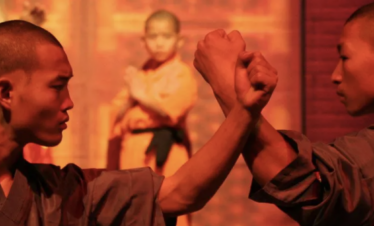
At first glance they are spectacle. Look closer and they are martial art. Both dance forms grew directly from kung fu tradition, and both remain part of the curriculum in Shaolin and wushu schools worldwide. The strength, balance, coordination and endurance required to perform them are the same qualities martial artists train daily — which is why learning lion and dragon dance deepens kung fu practice rather than competing with it.
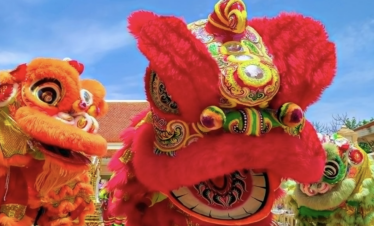
The Lion Dance is performed by two dancers animating a single lion — one controlling the expressive head, one the tail — through acrobatic jumps, playful interaction with the audience, and the ritual “cai qing” (plucking the greens), all driven by the thunder of drums, cymbals and gongs. The Dragon Dance challenges a whole team to bring a dragon costume, sometimes over 20 meters long, to life through spiraling turns, rising and falling waves, and flowing serpentine patterns that demand perfect synchronization. In both, mastery is as much about rhythm and teamwork as movement.
The symbolism gives the art its soul. The dragon carries wishes of power, luck and prosperity; the lion embodies courage and protection, its noise and energy said to ward off evil spirits. Performers don’t merely dance — they carry blessings into homes and businesses, a role that has made lion dance a fixture of feng shui practice and of Chinese cultural identity across the diaspora.
One of the art’s great strengths is accessibility. No prior experience is required, training adapts to any age and fitness level, and progression is fast — beginners typically learn head movements, paw work and basic body turns in their first sessions. For those who want more, lion and dragon dance have thriving competitive scenes at local, national and international level, with teams and championships around the globe.
Beyond technique, practitioners gain something harder to teach: teamwork under pressure, cultural fluency, and membership in a living tradition that spans continents. Few experiences bond a group faster than bringing a dragon to life together — and few martial arts skills are as instantly recognizable, or as joyfully received, anywhere on Earth.
Whether you encounter lion and dragon dance as part of a kung fu program, a cultural workshop, or a performance team in your own city, it offers the same rare combination: a genuine martial workout, a window into Chinese culture, and the thrill of stepping into a tradition over two thousand years young.