
Cambodia
Where Stone Gods and Living Warriors Meet
For those who seek more than a mere vacation, Cambodia travel offers a profound collision of cosmic architecture and living combat arts. This is a land where the Tonlé Sap lake reverses its course each year, swelling from 2,500 to 16,000 square kilometers between seasons; where ancient temples outlived empires; and where the echo of combat still rings from sandstone walls carved a thousand years ago. To explore the Angkor Archaeological Park—a UNESCO World Heritage site—is to walk through a living museum where every carved stone tells a story of civilization, resilience, and the indomitable spirit of the Khmer people.
Cambodia’s Must-See Temples: Stone Testaments to a Lost Empire
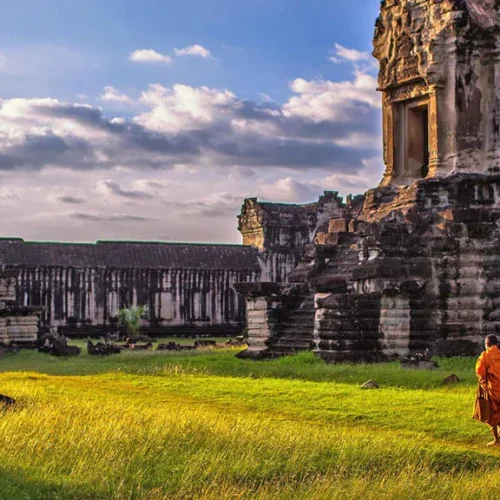
Any journey into the temples of Cambodia begins, as it must, with the majestic Angkor Wat. Built in the 12th century, this iconic Cambodian temple stands as the largest religious edifice in the world—a monumental complex covering 1.6 million square meters, representing the ultimate statement of Khmer architectural genius. The central tower rises 65 meters high, symbolizing Mount Meru, the sacred center of the Hindu universe, while four smaller towers represent other holy mountains. But Angkor Wat is not merely a monument to be observed; it is an experience to be absorbed. Stretching around the outside of the central complex is an 800-meter-long sequence of bas-reliefs, intricate carvings depicting historical events and stories from Hindu mythology. Over 2,000 apsara carvings adorn its walls—celestial dancers frozen in stone for eternity. Originally a Hindu temple dedicated to Vishnu, Angkor Wat has for centuries hosted a community of Buddhist monks whose saffron robes animate this landscape of stone and forest, making it a must-visit on any Siem Reap itinerary.
But Angkor is not one temple; it is a sprawling city of gods. At the heart of Angkor Thom stands the Bayon, a 12th-century marvel that is mesmerizing and slightly mind-bending. Its 54 towers are carved with colossal faces on each cardinal point—serene, enigmatic, watching in every direction. These faces represent both King Jayavarman VII and the omnipresent Buddha, projecting an image of Mount Mandara in the middle of the Ocean of Milk. The Bayon is the very centerpiece of the larger Angkor Thom city, and with its classic carved faces, it remains one of the best-loved ancient temples in Southeast Asia. Walk among them at sunrise or sunset, and you will understand why Cambodia’s religious sites are not just architectural achievements but profound spiritual encounters.
Then there is Ta Prohm—the “Tomb Raider Temple”—where nature has reclaimed what man built. Shrouded in dense jungle, this famous jungle temple is ethereal in aspect and conjures a romantic aura. Built in 1186 as a Buddhist monastery dedicated to the mother of Jayavarman VII, it has been left largely untouched by archaeologists except for clearing paths and structural strengthening. Here, vast banyan trees have wrapped their roots around crumbling towers and walls in a slow, muscular embrace. Almost 80,000 people were required to live in or visit this temple in its heyday, including over 2,700 officials and 615 dancers. Today, it stands as the undisputed capital of the kingdom of the trees—a haunting reminder that even the greatest human achievements must eventually yield to the forces of nature.
Venture beyond the main Angkor complex, and Cambodia travel reveals quieter corners with their own pedigree. Banteay Srei, the 10th-century “Citadel of Women,” is cut from pinkish-red sandstone, a medium that lends itself to the intricate carvings and delicate designs seen throughout the structures. Local legend claims the carvings were so fine they must have been the work of women or goddesses. Despite its small size, Banteay Srei is considered one of the most striking examples of classical Khmer art and one of the best-preserved temples from this era. Further afield, Banteay Chhmar offers exceptional narrative bas-reliefs depicting military processions and daily life during the Khmer Empire—battle scenes on land and water between the Khmer and Cham, preparations for war, and royal audiences. Even Sambor Prei Kuk, centuries older than the monuments most visitors come for, holds some of Southeast Asia’s most unusual early brick temples. A three-day pass for the Angkor Archaeological Park unlocks dozens of these sacred spaces, each with its own story to tell.
The Journey: Practical Travel Tips and Cultural Insights
To travel through Cambodia is to trace the arc of a civilization—from the brick sanctuaries of Sambor Prei Kuk to the cosmic grandeur of Angkor Wat, from the serene faces of the Bayon to the jungle-strangled ruins of Ta Prohm. But it is also to encounter a living culture, one where the martial arts carved into temple walls are still practiced with fierce pride today. The traditional greeting, the sompiah—hands joined at face level with a slight inclination—is a fundamental gesture of respect. In places of worship, shoulders and knees must be covered, and shoes removed before entering. Calm and patience are central values in interactions with locals, enriching every aspect of your Cambodia travel experience.
The best time to visit Cambodia is from November to February, when the weather is relatively dry and cool, making temple exploration and outdoor martial arts events exceptionally comfortable. But whenever you come, come prepared to be moved. Cambodia is not just a destination; it is a revelation. It is a country where water reverses course, where empires linger in brick and stone, and where the spirit of the warrior still breathes—not just in the temples, but in the resilient hearts of its people.
In the end, what you will remember is not just the grandeur of the Siem Reap temples or the adrenaline of watching a Kun Khmer bout, but the feeling of standing before stones that have watched a thousand years of history unfold—and knowing that, somehow, they are still watching over this timeless, indomitable land.
Cambodian Martial Arts
The Living Legacy of Cambodian Martial Arts: Bokator and Kun Khmer
What makes Cambodia’s ancient temples truly extraordinary is not just their breathtaking beauty but what they depict. On the walls of these sanctuaries, frozen in stone for a millennium, are the fighting arts of the Khmer Empire. Archaeologists have identified Cambodian martial art bas-relief sculptures related to Kun Khmer, wrestling, and Bokator at Ta Prohm, Bayon, Angkor Wat, Banteay Samre, Preah Khan, and Prei Temples. These carvings show fighters in dynamic poses, with arms raised in striking positions—undeniable evidence that Cambodia’s martial traditions are as old as its greatest monuments.
Bokator, or Kun Bokator—”the art of pounding the lion”—is an ancient battlefield martial art believed to trace its origin back to the 1st century AD. Oral tradition indicates that Bokator (or an early form thereof) was the close-quarter combat system used by the ancient Cambodian armies before the founding of Angkor. It is one of the oldest fighting systems existing in the world and was formally recognized as intangible cultural heritage by UNESCO in 2022. Formally referred to as lobokkatao, Bokator was developed as a close-quarter combat system and is intricately engraved on the walls of Angkor Wat itself. It encompasses hand-to-hand combat, wrestling, and weapon techniques, incorporating strikes, throws, locks, and submissions based on animal forms. Today, visitors seeking authentic Cambodian martial arts experiences can witness live Bokator demonstrations or even sign up for sessions at dedicated clubs in Siem Reap, where masters teach the fundamentals of this ancient battlefield art.
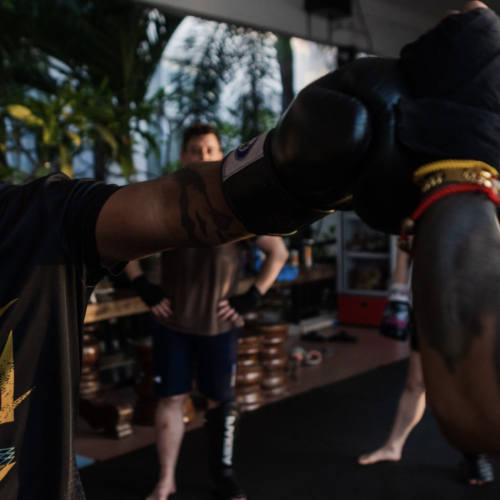
Pradal Serey, also known as Kun Khmer or Traditional Khmer kickboxing, is another martial art that originated in the Khmer Empire. The name translates to “free-style fighting,” reflecting the limited-rules, high-intensity nature of the art. Physical evidence can be found in carvings at Banteay Chhmar Temple, constructed in the late 12th century, where bas-relief artwork depicts figures engaged in combat using instantly recognizable knee and elbow strikes. Modern martial scholars have identified Khmer influences in several Southeast Asian styles, leading them to postulate that Pradal Serey was the primary precursor to muay boran as well as muay Thai. In its early form, strikes using any part of the hands, feet, shins, knees, and elbows were legal—head butts too. Today, Kun Khmer is one of Cambodia’s national sports, with matches consisting of five three-minute rounds. Every weekend, Cambodian television broadcasts these fights, and they are deeply popular among locals. For an authentic cultural immersion, visitors to Phnom Penh can watch live matches ringside at local stadiums, complete with traditional music played on drums, reed flutes, and finger chimes.


Martial Arts, Culture and Travel
A Journey of Discipline and Discovery
Martial arts are more than just physical combat—they are a gateway to understanding culture, history, and personal growth. For travelers seeking unique experiences, combining martial arts training with exploration offers a profound way to connect with local traditions. From the sacred dojos of Japan to the vibrant Muay Thai camps of Thailand, martial arts tourism is a growing trend that blends fitness, adventure, and cultural as well as language immersion.
The Cultural Roots of Martial Arts
Every martial art carries the essence of its birthplace. In Japan, disciplines like Karate, Judo, and Kendo emphasize respect, discipline, and the samurai’s Bushido code. Training in a traditional dojo often includes bowing rituals and meditation, reflecting Zen Buddhist influences. Meanwhile, China’s Kung Fu—especially Shaolin styles—integrates Taoist and Buddhist philosophies, focusing on harmony between mind and body.
In Thailand, Muay Thai is more than a sport—it’s a national symbol. Fighters perform the Wai Kru dance before matches, paying respect to teachers and ancestors. Similarly, Brazil’s Capoeira blends martial arts, dance, and music, rooted in the resistance of enslaved Africans. Understanding these cultural layers enriches the training experience, turning each session into a lesson in history and tradition.
Top Destinations for Martial Arts Travel
Japan: The Way of the Warrior
Kyoto & Okinawa: Train in Karate’s birthplace or practice Kendo in historic dojos.
Tokyo: Experience Aikido or Judo at world-renowned schools like the Kodokan Institute.
Cultural Bonus: Attend a tea ceremony or visit a samurai castle to deepen your understanding of Bushido.
Thailand: The Art of Eight Limbs
Bangkok & Chiang Mai: Train at legendary Muay Thai camps like Fairtex or
Tiger Muay Thai.
Cultural Bonus: Witness a Muay Thai fight at Rajadamnern Stadium and explore Buddhist temples to see the spiritual side of the sport.
China: The Home of Kung Fu
Shaolin Temple: Train with monks in the birthplace of Shaolin Kung Fu.
Wudang Mountains: Learn Tai Chi amid misty peaks and ancient Taoist temples.
Cultural Bonus: Participate in meditation sessions and explore the Great Wall for a full cultural experience.
Brazil: Rhythm and Combat
Salvador da Bahia: Immerse yourself in Capoeira, where martial arts meets Afro-Brazilian culture.
Rio de Janeiro: Train Brazilian Jiu-Jitsu (BJJ) where the Gracie family revolutionized combat sports.
Cultural Bonus: Join a Capoeira roda (circle) with live berimbau music and acrobatics.
How to Plan a Martial Arts Travel Experience
Choose Authentic Schools: Look for certified instructors with traditional teaching methods.
Combine Training with Sightseeing: Visit temples, historical sites, and local festivals.
Respect Local Customs: Learn basic etiquette, such as bowing in Japan or performing the Wai Kru in Thailand.
Why Martial Arts Travel is Transformational
Training in martial arts while traveling is more than a workout—it’s a journey into discipline, culture, and self-discovery. Whether you’re meditating with Shaolin monks, sparring in a Thai gym, or dancing Capoeira on a Brazilian beach, these experiences create lifelong memories and a deeper connection to the world.
Ready to begin your martial arts adventure? Pack your gear, book your trip, and step onto the mat of a new cultural experience!