
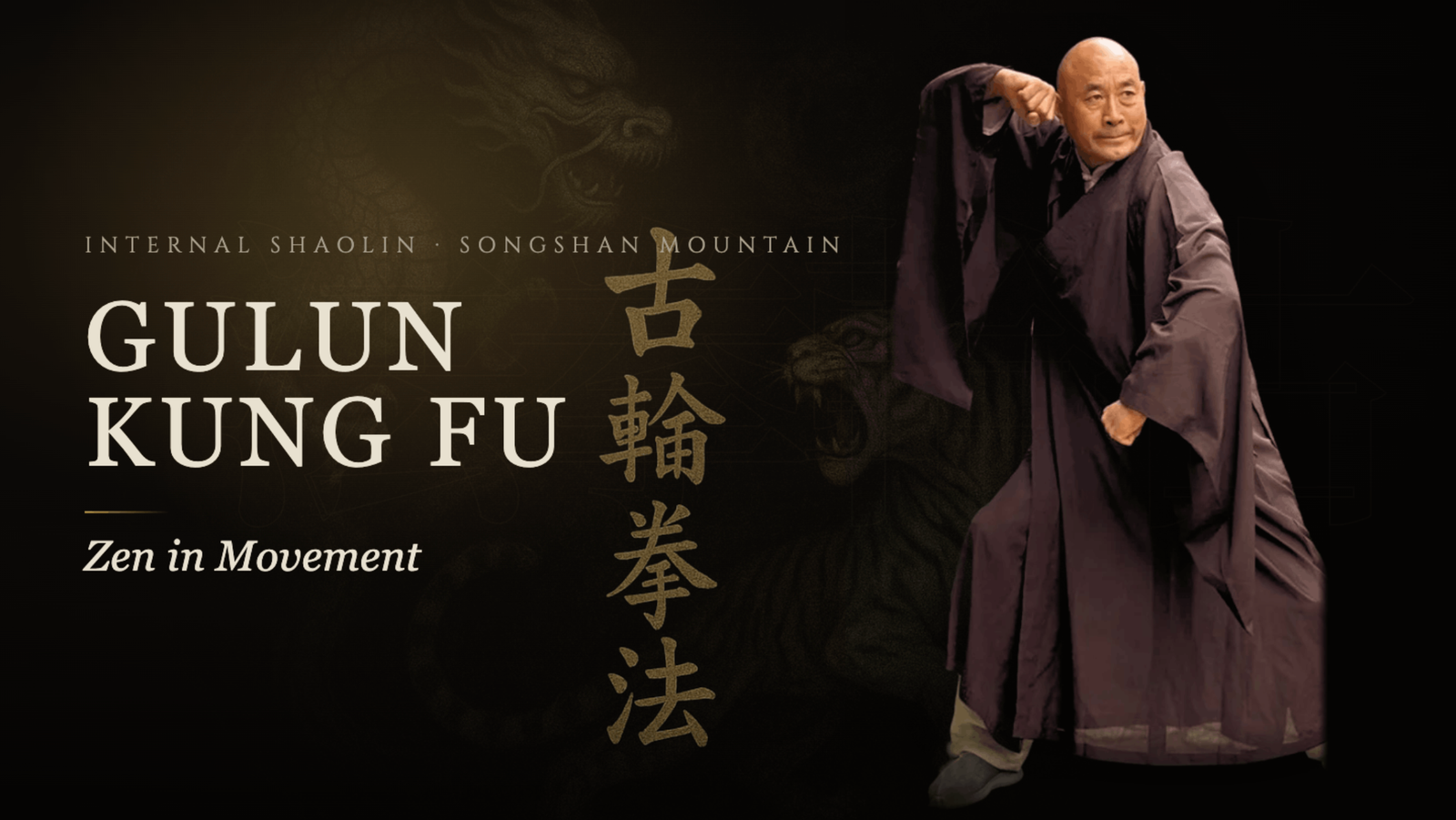
Gulun Kung Fu Retreat: 14-Day Retreat with Shifu Wu Nanfang
October 10–24, 2026 | Gulun Chan Academy
For the first time, the Gulun Chan Academy opens its doors for an exclusive, immersive retreat—a rare opportunity to train under the direct guidance of Shifu Wu Nanfang.
This is not a casual workshop. It is a transformative journey into the living essence of the Gulun tradition, where the stillness of Chan meditation meets the power of authentic Kung Fu.
Why This Retreat Is Unique
For decades, Shifu Wu Nanfang has taught selectively, transmitting his knowledge only to those truly ready to receive it. He does not teach lightly. This retreat marks the first time he will offer daily personal instruction in both Gong Fu and Chan Dharma,
This retreat is designed for practitioners who seek more than physical technique. It is an exploration of the inner martial arts—a deep dive into the unity of movement and mindfulness.
- Daily Chan Talks: Each evening, Shifu and Senior Disciple Ben will deliver a series of talks on the core philosophy of the tradition, revealing the subtle interface between meditative insight and martial application.
- Meditative Practices: The days will be structured around Zhan Zhuang (standing meditation), sitting meditation, and guided Chan discussions.
What You Will Learn
The curriculum is rooted in the foundational pillars of the Gulun system, yet flexible enough to accommodate advanced practitioners.
- Core Focus:
- Gulun Kung Fu basics and alignment principles
- Ba Duan Jin (Eight Pieces of Brocade) – the classical Qigong set for health and energy cultivation
- Advanced Opportunities:
- For seasoned students, Shifu will tailor instruction to include more advanced Gong Fu forms and internal power development—a rare chance to refine your practice with a living master.
Who Is This Retreat For?
This experience is for those who are ready to sit with themselves. To find stillness amidst the noise. To confront their limits and expand their awareness through the practice of traditional internal Shaolin Kung fu
Whether you are a beginner seeking an authentic entry point or a seasoned martial artist looking to deepen your internal practice, this retreat offers a unique container for growth.
Daily Schedule (Overview):
- Morning: Standing Meditation & Gong Fu Training
- Afternoon: Qigong (Ba Duan Jin) & Individual Corrections
- Evening: Chan Talks & Sitting Meditation
This is a small-group, intimate retreat. Spaces are limited to preserve the quality of instruction and the depth of the experience.
Event Details:
- Dates: October 10–24, 2026
- Location: Gulun Chan Academy
- Instructors: Shifu Wu Nanfang & Senior Disciple Ben
Secure your place today. This is a once-in-a-lifetime opportunity to receive the teaching directly from the source. Contact us using the contact form or join the Wechat group.
Overview
The Daily Schedule
- 6:00–7:00 — Standing meditation & pay respect to Bodhidharma
- 7:00 — Breakfast
- 7:30–8:00 — Chan in life (sweeping the floor, cleaning)
- 9:00–11:00 — Gulun Kung Fu
- 11:45 — Lunch
- 12:30–13:20 — Calligraphy (optional)
- 13:30–14:20 — Rest
- 14:30–16:30 — Gulun Kung Fu
- 17:30 — Dinner
- 18:00–19:00 — Evening talk with Shifu / Ben
- 19:00–20:00 — Meditation
- 21:00 — Lights out
Special Trip
On the weekends, we will take special trips to:
- Shaolin Temple and in particular the cave where Bodhidharma sat in meditation for nine years
- The birthplace of Gulun Kung Fu, where founder Wu Gulun lived.
There will also be space for you to take alone time in nature.
Who Should Come
Anyone looking for a deep experience of internal martial arts with a Zen flavour.
You don’t need prior experience with Gulun Kung Fu.
This retreat will be meditative, not suitable for those looking for fitness workouts, flashy moves or a photo-taking tourist experience.
Contact us
Use the contact form below or add us on Wechat by scanning the code.

Highlights
- Train in an Authentic, Unbroken Lineage
- More Than Martial Arts: A Path to Holistic Well-bein
- Immerse Yourself in a Zen Environment
- A Structured Program for Real Progress
- Experience Traditional Temple Life and Culture
- Expert Guidance from Dedicated Masters
- A Supportive and Welcoming Community
- Our team is ready to help
Training
Your Teachers
You’ll primarily learn from one of the master’s senior disciples who has lived and breathed this style for many years. These teachers carry deep understanding of both physical technique and internal principles.
Shifu Wu Nanfang has an exceptionally keen eye and sensitive perception. He observes all training and can see each student clearly—your sincerity, your dedication, your potential. If you demonstrate genuine commitment, particularly through careful attention to basic practice, he’s more likely to offer personal guidance.
When he does teach directly, every word and gesture carries the weight of five generations. His energy and attention are precious—we ask that you respect this and not pressure him for personal instruction. Let it come naturally, when you’re ready.
For this retreat you will be taught by Shifu Wu Nanfang and Ben Lucas.
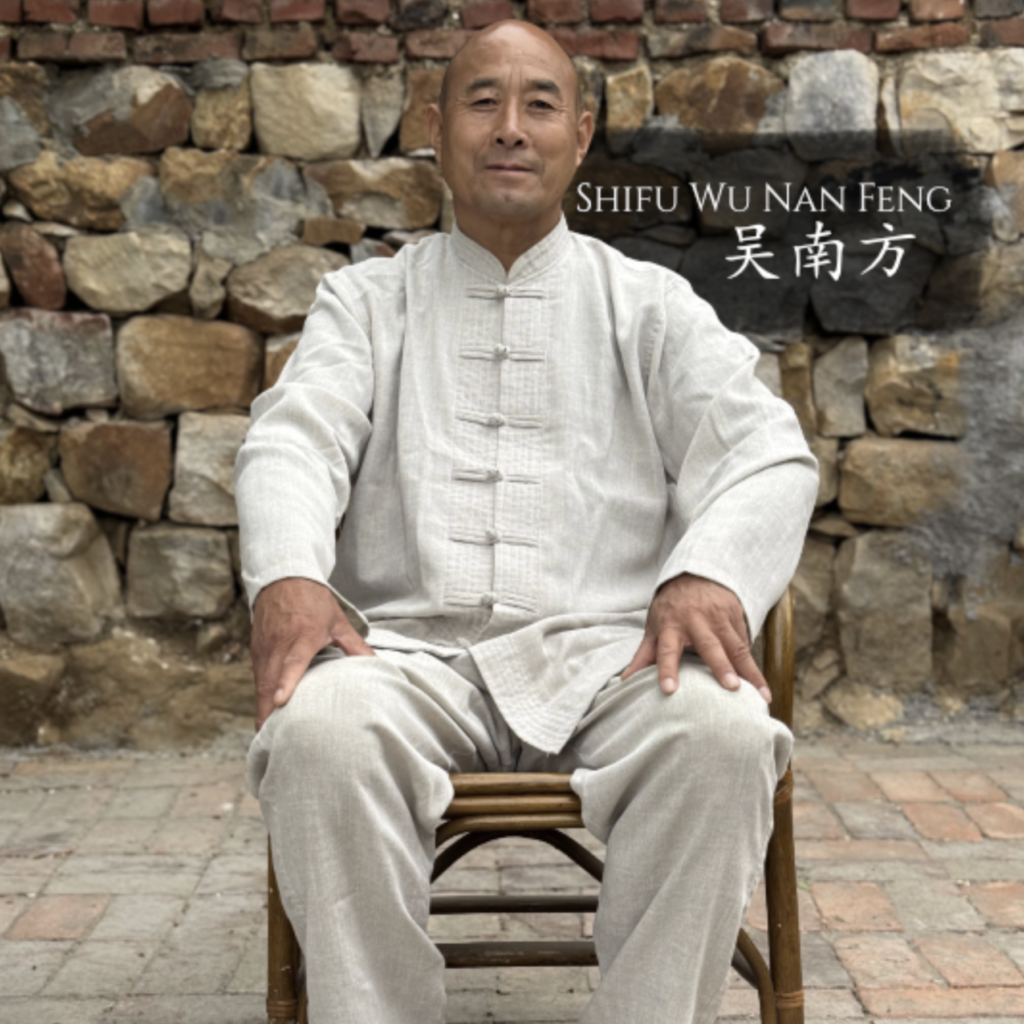
Shifu Wu Nanfang began his training around 1972 at the age of ten, studying under his grand-uncle Wu Youde in the evenings after school—a period that placed him directly in the path of the Cultural Revolution (1966–1976), when the Chinese state actively suppressed Buddhist and martial traditions, forcing the Wu family to practise secretly at night in the mountains behind Shaolin Temple after the village had fallen asleep. As a boy, he slept beside his great-grandfather, absorbing presence as much as stories, and was taken to Shaolin Temple’s Baiyi Hall where murals of his ancestor Wu Gulun awakened a deep recognition rather than mere ambition. He went on to study under grandfather Wu Youde, uncle Wu Musheng, cousin Qiao Heibao, and for over two decades with Master Xingxing in both martial and Zen practices, and at seventeen, against his family’s wishes, he committed to a lifelong path of practice, later taking Buddhist refuge at Shaolin Temple in 1995 under Abbot Shi Suxi, who gave him the Buddhist name Defang. Following his formal training, Shifu spent nearly a decade travelling across Songshan Mountain, tracing the students his great-grandfather and grandfather had taught, gathering the scattered fragments of Gulun Kung Fu that had drifted across the region through the upheavals of the twentieth century—a labour of love he undertook not to claim ownership, but to carry forward a trust cultivated by generations of Shaolin monks. Today, Shifu Wu Nanfang stands as one of the few living holders of this complete tradition, preserving the Chan heart of Shaolin for sincere students from around the world.
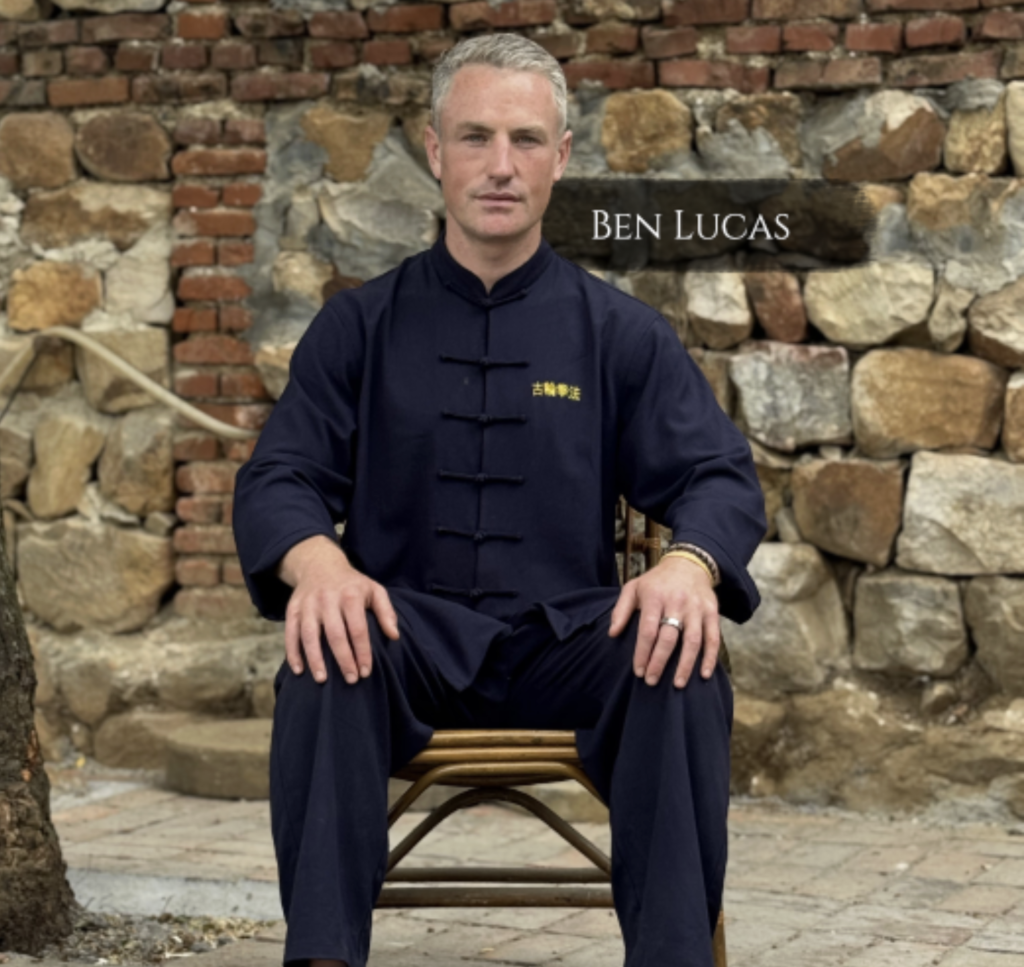
Ben Lucas is a dedicated disciple of Master Wu. Ben has been training one-on-one with Shifu Wu Nanfang since September 2024—a daily immersion in practice, tea, and the quiet observation of a man he describes as unlike any he has ever encountered.
In ten months of daily contact, Ben has witnessed something remarkable: a man who has never once appeared irritated, nervous, or worried. Shifu Wu Nanfang exists in a state of constant inner harmony, and at 63, he looks exactly as he did in videos from 15 years ago.
What Ben has come to understand is that Shifu embodies perfect yin-yang balance—extraordinarily powerful yet utterly peaceful, able to speak with force without aggression, and so kind that everyone around him feels uplifted. Shifu lives simply, untouched by commercial pressures, and everyone who meets him recognises immediately that he has touched something real.
Ben will be joining Shifu during the October retreat, contributing to the evening Chan talks and offering his reflections alongside Shifu’s teachings. His presence bridges the ancient tradition and the modern seeker—a living example of what is possible when Chan and Kung Fu are fully integrated.
The Training Experience: What to Expect at Gulun.
Internal Kung Fu: The Heart of the Practice
Most of our standard Gulun Kung Fu training is internal—slow, spiralling, and deeply meditative. Every movement originates from the dantian (the body’s energetic centre) and flows outward through the limbs with intention and awareness.
This is not about speed, flash, or athletic display. It is about:
Presence – training with full attention to every breath and alignment.
Alignment – building structural integrity that supports both physical and energetic development.
Breath – using the breath to guide movement and quiet the mind.
The forms are compact, precise, and designed to cultivate internal power (Fa Jin) while maintaining a state of meditative stillness. As Shifu Wu Nanfang teaches: “We practise Chan, not Chuan.” The martial movements are vehicles for mindfulness—not ends in themselves.
Optional Morning Conditioning: Body and Soul Together
Before our official morning practice, we offer an optional student-led conditioning session—entirely voluntary and open to all levels.
This is not a gruelling military workout. It is training with a Kung Fu flavour:
Flexibility
Dynamic stretching and mobility work to open the joints and release tension.
Strengthening
Bodyweight exercises—squats, lunges, core work—that build the structural integrity needed for low stances and sustained practice.
Endurance
Light running and sustained postures to develop stamina, mental grit, and the ability to hold stillness for extended periods.
Why we offer this: We believe your body develops alongside your soul. The conditioning prepares your physical vessel for the deeper internal work, ensuring you are strong enough to hold the stances and open enough to receive the energy work.
This is entirely student-led and 100% optional. If you prefer to rest, meditate, or simply enjoy the morning stillness, you are equally welcome.
Training in Nature: The Mountain as Your Temple
One of the most beautiful aspects of training at Gulun is the freedom to take your practice into nature.
The academy sits at the foot of Mount Songshan—one of China’s Five Great Mountains and a UNESCO World Heritage site. Surrounding the academy, the forests and mountain trails offer quiet, solitary spots for personal practice.
Why Training in Nature Matters
Many students find that training among the pines, with birdsong replacing walls and the sky as your ceiling, deepens their connection to the art in ways that indoor practice cannot replicate.
Stillness deepens – the natural environment invites a quieter mind.
Energy flows freely – fresh mountain air and open space support the circulation of Qi.
Perspective shifts – training at the foot of a sacred mountain reminds you of something larger than yourself.
Huishan Temple: A 1,500-Year-Old Sanctuary
Just 1 kilometre from the academy stands Huishan Temple—a Buddhist temple over 1,500 years old, predating even the famous Shaolin Monastery.
This ancient site carries a palpable, reverent stillness that has drawn practitioners for centuries.
What Our Students Love About Huishan Temple
Early Morning Practice: Many students rise before dawn to practise Zhan Zhuang (standing meditation) in the temple courtyard as the sun rises over the mountains. The combination of ancient stone, morning light, and absolute quiet is unforgettable.
Special Energy: The temple’s age and history create an atmosphere of profound peace—a living reminder that you are walking the same ground as generations of Chan practitioners before you.
A Short Walk: Just 15 minutes from the academy, it is an easy morning or evening pilgrimage—a perfect way to begin or end your day.
As one student put it: “Standing in that courtyard at sunrise, I understood why people have come here for fifteen hundred years. The silence is not empty—it is full.”
A Typical Day – At a Glance
Early Morning
Optional conditioning (flexibility, strength, endurance) – student-led
Morning
Official Gulun Kung Fu training – internal forms, stances, breathwork
Afternoon
Theory, corrections, personal practice, or rest
Evening
Chan talks with Shifu, sitting meditation, and group reflection
Free Time
Walk to Huishan Temple, train in the forest, read, or simply rest
What You Will Take Home
This is not a holiday. It is an immersion—a chance to step out of your ordinary life and into a tradition that has been refining itself for over a millennium.
By the end of your retreat, you will have:
A felt understanding of internal Kung Fu—not just intellectual knowledge.
A clear daily practice you can sustain at home.
Structural alignment that supports your body and energy for years to come.
A quiet mind that carries the stillness of the mountains back with you.
Community—connections with fellow practitioners who share your path.
The Foundations: Your Path to Mastery
Everyone begins at the same place. The foundations of Gulun Kung Fu are not a hurdle to be cleared—they are a doorway to a lifetime of practice. Each element builds upon the last, creating a complete system that develops body, breath, and mind in unison.
Here is what you will learn first.
The Five Foundations at a Glance
Standing Meditation (Xu Zhuan)
Stillness, alignment, grounding
The root of everything—develops structural integrity and quiet mind
Zhuan Gong
Five fundamental stances
Structural awareness and complete grounding
Ba Duan Jin
Ancient Qi Gong exercises
Open energy channels, prepare body for deeper practice
Pan Gen
Basic form with spiralling movements
First taste of Gulun’s signature flow and root-based power
Progression
More complex forms
Each new form builds on the principles established in the basics
1. Standing Meditation (Zhan Zhuang / Xu Zhuan)
The Root of Everything.
Stand still. Align your structure. Sink your energy. Breathe.
Zhan Zhuang—standing meditation—looks deceptively simple. You are simply standing. But within that stillness lies infinite depth. The posture itself teaches you:
Structural alignment – bones stack, joints open, the body becomes a unified vessel.
Energy sinking – the weight drops into the feet, the breath descends to the dantian.
Mental quiet – with nothing to do and nowhere to go, the mind naturally settles.
This is not a warm-up. This is the foundation of everything that follows. Every movement, every form, every application flows from the stillness and structural integrity cultivated here.
“Standing meditation is not doing nothing. It is doing one thing perfectly—being present in your body.”
2. Zhuan Gong – The Five Fundamental Stance
The five stances of Zhuan Gong are the alphabet of Gulun Kung Fu. Almost every movement in the entire system—from the simplest to the most advanced—is a variation or combination of these postures.
Horse Stance (Ma Bu)
Builds leg strength and structural stability
Bow Stance (Gong Bu)
Develops forward rooting and power projection
Drop Stance (Pu Bu)
Cultivates flexibility and low-centre stability
Empty Stance (Xu Bu)
Teaches weight distribution and readiness
Cross Stance (Jiao Bu)
Develops mobility and transition awareness
Here you learn structure—how to align your bones, engage your fascia, and ground yourself completely. Without this foundation, nothing else works properly.
3. Ba Duan Jin – Eight Pieces of Brocade
The Ba Duan Jin is one of the oldest and most beloved Qi Gong systems in China—over 1,000 years of refinement distilled into eight beautiful, flowing movements.
1. Two Hands Hold Up the Heavens
Opens the energy channels of the upper body
2. Drawing the Bow
Strengthens the lungs and heart
3. Separate Heaven and Earth
Harmonises the organs
4. Wise Owl Gazes Backward
Heals the spine and nervous system
5. Sway the Head and Shake the Tail
Releases tension from the entire spine
6. Two Hands Hold the Ankles
Strengthens the kidneys and lower back
7. Clench Fists and Glare Fiercely
Develops explosive internal power
8. Bouncing on Heels
Soothes the nervous system and returns energy to the centre
These exercises open the body’s energy channels, release chronic tension, and prepare you physically and energetically for the deeper work of internal Kung Fu. They are healing, accessible, and deeply rewarding.
4. Pan Gen – Your First Form
Pan Gen is the first basic form you will learn at Gulun—and it is where the magic begins.
This form focuses on moving from your roots and centre. Every step, every turn, every arm movement originates in the dantian and spirals outward through the limbs.
What you will experience:
Flowing, spiralling movements – the signature quality of Gulun Kung Fu.
Rooted power – each movement is grounded, stable, and connected to the earth.
Effortless grace – when the structure is correct, the movement becomes almost effortless.
This is your first taste of the beautiful, flowing martial artistry that defines Gulun. It is simple enough to learn, yet profound enough to spend a lifetime refining.
The Progression: Building on Foundations
After mastering the foundations—when your body has internalised the stances, your breath moves with intention, and your mind has begun to settle—you progress to more complex and beautiful forms.
Each new form is not simply a “harder” version of the previous one. It is a deepening—a layering of new principles onto the solid foundation you have already built.
The progression is organic:
You learn the form slowly.
You refine the alignments.
You add speed, power, and spiralling energy.
You begin to understand the internal mechanics.
You discover the Chan within the movement.
What You Will Take Home
By the end of your retreat, you will have:
A felt understanding of the five foundations—not just intellectual knowledge, but embodied experience.
A clear daily practice you can sustain at home.
Structural alignment that supports your body and energy for years to come.
A quiet mind—the ability to find stillness even in motion.
The first forms of a tradition that will unfold for a lifetime.
Includes/Excludes
14 Days, 8000 CNY (1120 USD) - Cost Includes
- Daily teaching from Shifu Wu Nanfang, lead teacher Hufei and Ben
- Accommodation in our newly renovated rooms
- Training and lectures
- Three meals a day: All meals will be vegetarian
- Training uniform
- Wifi
- Weekend excursions
- Local food
Cost Excludes
- Travel to the academy
- Visa costs
- Flights
- Personal spending
- Insurance
Frequently Asked Questions
A: Absolutely not. This retreat is intentionally built for complete beginners.
The daily curriculum centers on three foundational pillars—standing meditation (Zhan Zhuang), breathwork (Qigong), and the five basic stances of Gulun Kung Fu—all of which require zero previous experience. Shifu Wu Nanfang will guide every movement step-by-step, ensuring you build proper internal structure from day one.
What truly matters to us is not your athletic background, but your willingness to practise slowly, patiently, and consistently. Speed and flash have no place here; depth and awareness do.
Over the years, we have welcomed two types of students:
- Experienced martial artists from other traditions (Karate, Taekwondo, Wing Chun, etc.) who come to deepen their internal power.
- Complete novices who arrive with curiosity and leave with a transformed sense of stillness and body awareness.
In fact, many of our most dedicated long-term students started with zero martial arts background. The only prerequisite is an open mind and a sincere desire to sit with yourself.
A: Almost certainly not—and we hear this concern every single day.
Gulun Kung Fu is internal kung fu. This means the practice lives in the breath, the awareness, and the quiet alignment of the body—not in explosive acrobatics or brute force. A calm, present mind matters infinitely more than a flexible or athletic physique.
In fact, this tradition is more suitable for adults than for children. Adults bring patience, life experience, and the emotional maturity required to sit with discomfort and practice slowly. Where a child might chase flashy moves, an adult can genuinely grasp the meditative heart of the art.
Compared to the high-impact, physically punishing external styles of Shaolin Kung Fu, our foundation work—standing meditation, breathwork, and the five basic stances—is remarkably accessible. The movements are natural, low-impact, and carefully paced.
Will it get harder as you progress? Yes—but only in the way that any meaningful growth requires. The challenge deepens with your ability, never before it. You will be guided step-by-step by Shifu Wu Nanfang, who has taught students in their 60s and 70s with zero prior experience.
If you can breathe and stand, you can begin. Everything else unfolds from there.
A: Not significantly—and we are completely upfront about that.
While our senior teacher, Hufei, may occasionally offer practical insights into the martial applications of specific postures, these are rare digressions rather than the core curriculum. The retreat is not a fighting bootcamp, nor does it prepare you for the ring or the street.
The guiding philosophy of our lineage comes directly from Shifu Wu Nanfang:
"We practise Chan, not Chuan."
In plain terms: we cultivate Zen (mindfulness, presence, and internal awareness), not external fighting technique (Chuan). For us, the "martial" in "martial art" is purely a vehicle for internal development—a moving meditation—never an end in itself. We use the body to train the mind, not to defeat an opponent.
If your primary goal is to learn how to fight, spar, or compete, we will be the first to tell you that this is not the right school. There are many excellent teachers for that path, and we respect them deeply. We encourage you to find a school that matches that goal—you will be happier there, and we will be happier knowing you found the right fit.
However, if you are drawn to a practice that uses physical discipline to:
- Quiet the restless mind
- Deepen self-awareness
- Cultivate internal energy (Qi)
- Uncover profound stillness within motion
…then you have found exactly the right place. Here, the only battle is with your own distractions. The only opponent is your own ego. And the only victory is a moment of genuine presence.
A: Not as part of the official curriculum—you won't find any iron-body drills, impact conditioning, or forced physical punishment here.
However, the training itself inherently cultivates physical resilience. The hours of standing meditation (Zhan Zhuang) and deep low-stance work quietly demand considerable leg strength, structural integrity, and muscular endurance. Your body adapts naturally through sustained practice, not through force or exhaustion.
That said, many of our most dedicated students choose to take their training a step further. On their own initiative, they gather for an optional hour of supplementary conditioning each morning—well before the official session begins. This student-led practice typically includes:
- Flexibility and dynamic stretching
- Light running or joint mobility work
- Balance drills
- Bodyweight strength training
This morning window is entirely voluntary. Beginners are never pushed into it, and you are equally welcome to rest or meditate during that hour instead.
What we love about this arrangement is that it reflects the spirit of our community: serious practitioners supporting each other to get the most out of their time here. If you want to push your physical limits, you will find a group to do it with. If you prefer to focus solely on the core Chan and Gong Fu practices, you are equally respected and valued.
In the Gulun tradition, we believe the body opens through presence and patience, not through brutality. The conditioning is a personal choice, never a requirement.
A: It is an excellent question—and the answer lies in both lineage and physical expression.
First, let us acknowledge the similarities: Like Tai Chi and Qigong, Gulun Kung Fu is an internal practice. It is slow, meditative, deeply beneficial for health, and cultivates conscious breathwork alongside internal energy (Qi). If you are drawn to these qualities, you are already on the right track.
However, the differences are significant and define our unique path:
- Lineage & Philosophical Roots:
Gulun Kung Fu descends directly from the Shaolin tradition—the very birthplace of Chan Buddhism. It is a temple art shaped by over a millennium of meditative and martial refinement. Tai Chi, by contrast, is rooted in Taoist philosophy and internal alchemy. While both are profound, they emerge from entirely different spiritual and cultural soils. - Movement Quality & Mechanics:
This is where the practice truly diverges. Gulun movements are relatively compact, and each posture flows deliberately from complete relaxation into dynamic, structured tension. You relax to release resistance, then express power through alignment.
Classical Tai Chi, in its most recognised form, emphasises a continuous, unbroken state of relaxation throughout the entire sequence—often described as "pulling silk." There is no explicit dynamic tension phase in the same way. - Why This Difference Matters:
The Gulun approach trains you to cultivate and release explosive internal power (Fa Jin) from a state of total softness. This builds not only profound health benefits but also a unique martial readiness—all without sacrificing the meditative stillness that makes Qigong so healing.
In short: if you love the health benefits of Tai Chi and Qigong but are drawn to the profound stillness, structural integrity, and explosive potential of the Shaolin Chan tradition, Gulun Kung Fu offers a beautifully distinct—and rare—path.
A: This is one of the most important questions you can ask—and we are glad you asked it.
The Shaolin Kung Fu that dominates YouTube, Instagram, and action films is almost exclusively external Shaolin. It is designed to be fast, explosive, acrobatic, and visually spectacular. You see splits, spinning kicks, backflips, and breaking demonstrations. It is athletic performance at its finest—and it is entirely legitimate within its own branch.
Gulun Kung Fu belongs to the rarely-seen internal Shaolin branch. Instead of chasing speed or flash, our practice is:
- Slow – each movement unfolds with deliberate, breath-led pacing.
- Spiralling – power moves in circular, coiling pathways rather than straight lines.
- Meditative – the mind remains settled and present, even as the body moves.
Every posture originates from the dantian—the body's energetic and physical centre—and spirals outward through the limbs. You do not throw a punch; you release it from your core. You do not strike a pose; you settle into structural alignment.
So what is the real difference? It comes down to aim:
| External Shaolin (YouTube) | Internal Shaolin (Gulun) |
|---|---|
| Develops the body for display, performance, and athletic prowess | Develops the mind and spirit for self-cultivation, awareness, and stillness |
| Emphasis on speed, height, and impact | Emphasis on structural integrity, breath, and internal power (Fa Jin) |
| Crowd-pleasing spectacle | Quiet, personal transformation |
Both traditions are authentic, deeply rooted, and worthy of respect. They are simply different branches of the same tree, grown for different purposes.
If you are searching for the quiet, transformative heart of Shaolin—the Chan itself—you have found its home in Gulun.
A: Very small—by design.
For our in-person training in China, classes are intentionally capped at a maximum of five to ten students, and we frequently offer one-on-one instruction when the format or student needs require it.
Why does this matter? Because in Gulun Kung Fu, the smallest misalignment—a tilted pelvis, a dropped shoulder, a shallow breath—can block your entire practice. With so few students, your teacher can see every detail, correct every error in real-time, and guide your development with surgical precision. You never have to compete for attention or worry that your bad habits are going unnoticed.
This philosophy extends seamlessly to our online live classes as well. We keep our digital sessions equally intimate so that when you submit video for review, you receive the same level of deep, personal, frame-by-frame feedback as if you were standing in the Shaolin courtyard.
In a world of crowded gyms, impersonal Zoom webinars, and "one-size-fits-all" teaching, our small classes preserve something increasingly rare: the authentic master-student transmission that has defined Chan and Shaolin for over a thousand years.
Here, you are not a number in a spreadsheet. You are a practitioner we are deeply committed to developing—at your own pace, in your own body, with your own unique challenges.
A: Any amount of time you can give to this practice is valuable—and we honour every single day you choose to spend with us.
Even 5 to 7 Days:
Do not underestimate the power of a short immersion. A single week in the Gulun environment—away from the noise of daily life, surrounded by the mountains, and receiving daily corrections from Shifu Wu Nanfang—can:
Clarify your posture and alignment like nothing online ever could.
Give you a tangible, felt experience of what "internal" truly means.
Provide a profound reset for your mind and nervous system.
And start you on or revitalize and inspiration for you to continue your journey of mindfulness.
It is a powerful "taste" of the tradition—enough to shift your perspective and give you a clear, actionable foundation to take home.
2 Weeks:
With two weeks, you move beyond the initial adjustment phase. The stances start to feel less foreign. The breath begins to sync with movement. You leave with a solid grasp of the core basics—the five stances, standing meditation (Zhan Zhuang), and the opening sequences of the form. This is a genuine launchpad.
1 to 3 Months:
This is where real grounding happens. Your body remembers the alignments. The practice stops being intellectual and becomes embodied. You begin to access deeper layers of the art—and genuinely transformative internal shifts become possible. For those who can commit to this length, we see profound, lasting change.
The honest truth—for any duration:
We have seen students stay for months and lose their practice within weeks of returning home. We have also seen students stay for just five days and maintain that spark for years—because they had a clear plan for follow-through. Here is what matters most: not how many days you stay, but what you do when you leave. That is exactly why we offer our structured online live programme. Whether you stay for 5 days, 2 weeks, or 3 months, our online programme acts as your bridge home:
Live sessions with real-time corrections.
Personal video reviews to stop bad habits forming.
An accountability community that keeps your daily practice alive.
Think of it this way: Your time in China is the kindling. The online programme is the oxygen that keeps the fire burning. Together, they create something truly sustainable—no matter how short your initial visit.
A: Yes — all three are available.
- Air conditioning in every room for your comfort.
- Hot water for showers, available daily.
- Wifi throughout the academy so you can stay connected with family and friends back home.
While the academy is nestled in a serene mountain environment, we ensure that the essential modern comforts are taken care of. Your focus should be on your practice — not on worrying about basic amenities.
A: We make this as straightforward as possible — and we are here to support you every step of the way.
Fly into Zhengzhou (CGO):
Zhengzhou Xinzheng International Airport is your most convenient gateway. Fly directly via major Chinese hubs like Beijing, Shanghai, Guangzhou, or Hong Kong, or connect through international carriers serving Zhengzhou.
Alternative Route – Wuhan:
If you prefer, you can fly into Wuhan Tianhe International Airport and take a high-speed train to Zhengzhou. The train journey is comfortable, scenic, and gives you a glimpse of the Chinese landscape before you arrive.
From Zhengzhou Airport to the Academy:
The academy is a straightforward 90-minute taxi ride from Zhengzhou Airport. We recommend booking your taxi via the Didi or Amap apps — both are reliable and widely used in China.
Address for your driver (copy and paste):
会善寺西800米路北800米古轮禅院
Cost Estimate:
Taxi fare: approximately 200 yuan
Road toll: approximately 50 yuan
Total: around 250 yuan (roughly $35 USD) — a small price for a smooth, direct journey to the mountains.
A few extra tips for a stress-free arrival:
1. Arrive with WeChat or Alipay
Set up one of these apps before you depart — they are essential for payments, transport, and communication in China.
2. Have the address ready
Screenshot the Chinese address above so your driver can enter it directly into their navigation system.
3. Stay connected
Purchase a local eSIM or roaming plan so you have data for Didi and WeChat as soon as you land.
4. Pack for the mountains
Even in warmer months, evenings can be cool — layers are your friend.
For comprehensive guidance — including visa applications, packing lists, cultural etiquette, and what to expect upon arrival — please contact us or send us a message in the WeChat group.
A: For our 14-day retreat, the process is refreshingly straightforward.
Your Primary Option: Tourist Visa (L Visa)
This is the standard choice for our retreat participants. The L Visa grants a stay of up to 30 days—more than enough for your two-week immersion and a day or two on either side for travel. Most applicants find this visa simple to obtain through their local Chinese embassy or visa application centre.
Even Easier: Visa-Free Entry
Depending on your nationality, you may not need a visa at all. Citizens of many countries—including several in Europe, Asia, and the Americas—qualify for visa-free entry into China for stays of 15 to 30 days.
We strongly recommend checking your specific country's status with your local Chinese embassy well in advance.
What We Provide to Support Your Application
To make your visa process as smooth as possible, the academy can issue an official invitation letter for your Tourist Visa application. This document often speeds up processing and adds credibility to your travel purpose.
To request your invitation letter:
Email us and we will make it happen.
We recommend starting this process at least 6 to 8 weeks before your planned departure to allow for any processing delays.
A Note for Those Considering a Longer Stay:
If you fall in love with the practice and wish to extend your journey beyond 30 days, we do offer Study Visa (X2) support for stays of up to 6 months. However, for the October retreat itself, the Tourist Visa or visa-free entry is all you need—simple, fast, and stress-free.
A: China is now a cashless society—almost the entire economy runs on mobile payments. The good news: in 2026, it has never been easier for foreign visitors to pay.
You have several excellent options. Here is what you need to know.
These two apps are accepted everywhere—taxis, restaurants, shops, temples, even street vendors.
Option 1: Alipay + WeChat Pay (Your Primary Tools)
What you need to do before departure:
1. Download both apps
Alipay and WeChat (Weixin) from your app store.
2. Register
Use your home mobile number—it works internationally.
3. Verify your identity
You will need to photograph your passport page and complete a quick facial scan.
4. Link your international card
Visa, Mastercard, JCB, Discover, and Diners Club are all supported.
Important: You do NOT need a Chinese bank account. Your foreign card works directly.
Which app is better for foreigners? Alipay tends to onboard international cards more smoothly than WeChat Pay, with fewer verification hurdles.
Option 2: PayPal + WeChat Pay (New for 2026)
From May 2026, a major new option is available: PayPal users can now scan WeChat Pay QR codes directly in China.
This means you can:
Open your PayPal wallet, Scan any merchant's WeChat Pay QR code, Pay instantly—no WeChat account or card linking required.
This is especially useful if you already use PayPal and want a simpler setup.
Option 3: Cash & ATMs (Your Backup)
While mobile payment is king, cash is still accepted—though some small vendors may struggle to make change. ATMs across China accept foreign bank cards (Visa, Mastercard, etc.) for cash withdrawals. "Combination payments" are increasingly available at airports and major tourist sites—you can mix cash, card, and mobile payment in a single transaction. Foreign bank cards are now accepted at over 5,000 merchants along Beijing's central axis and in other major tourist areas.
Fees & Limits – What to Expect
Alipay
WeChat Pay
Single transaction limit
~3,000 RMB
~6,000 RMB
Cards per account
Up to 10 cards (max 3 foreign cards)
Up to 7 major card networks
Fee for transactions under 200 RMB
Free
Free (全年)
Fee for transactions over 200 RMB
~3%
~3%
New user welcome offer
Check in-app
First 90 days: 1,000 RMB/day fee-free
Step-by-Step: What to Do Before You Arrive
Download Alipay and WeChat – install both before you leave.
Link your card – Wise and Revolut work smoothly; if you use a traditional bank, notify them about your China travel to avoid holds.
Complete passport verification – this unlocks higher spending limits.
Consider PayPal – if you already have an account, set it up as a backup.
Bring some cash – a small amount of RMB for emergencies (you can withdraw from ATMs on arrival).
A final reassurance: In 2026, paying in China as a foreigner is genuinely straightforward. The apps work, the fees are reasonable, and the system is designed to welcome you.
A: A handful of essential apps will transform your experience from confusing to seamless. Download them all before you fly—some require SMS verification that is far easier to complete with your home mobile network.
Here is your essential toolkit:
Communication & Payments (Your Daily Essentials)
WeChat
Messaging + Payments
China's everything-app. You will use it to message the academy, pay for meals, and scan QR codes everywhere.
Alipay
Payments + Bookings
The most foreigner-friendly payment app. Smoother card onboarding than WeChat Pay, and essential for booking trains and hotels.
Getting Around (Navigation & Transport)
Amap (高德地图)
Maps + Taxis
China's most reliable navigation app. Works offline and provides accurate public transport routes.
Didi (滴滴出行)
Ride-hailing
China's Uber. Reliable, affordable, and available nationwide—including your 90-minute journey from Zhengzhou Airport to the academy.
Translation (Your Language Lifeline)
Youdao Translator
Translation
Optimised for Apple devices and works offline. No VPN required.
Microsoft Translator
Translation
Excellent for Chinese and works without a VPN.
Google Translate
Translation
Good backup—but note that it requires a VPN to function in China, so it is best kept as a secondary option.
Useful Extras (For a Smoother Stay)
Taobao
Online Shopping
China's Amazon. Useful for ordering anything you forgot to pack.
Tap Translate
Translation
Another reliable offline option—great for menus and signs.
One Critical Rule: Download Before You Fly
Download every app on this list before leaving home.
Why? Many apps require SMS verification during registration. With your home SIM card, receiving that code is instant. Once you arrive in China, your phone may not have international roaming, and downloading apps from Chinese app stores can be complicated.
A few minutes of preparation at home saves hours of frustration on the ground.
Write a Review